“I think I have known Autumn too long” – E.E.Cummings
American poet, painter, essayist, author, and playwright. He wrote approximately 2,900 poems, two autobiographical novels and four plays
“I think I have known Autumn too long” – E.E.Cummings
American poet, painter, essayist, author, and playwright. He wrote approximately 2,900 poems, two autobiographical novels and four plays
The Razorback Dam Project – in the mountains one hour south of Sydney. Razorback is the home of multi-million dollar estates with million dollar views of Sydney
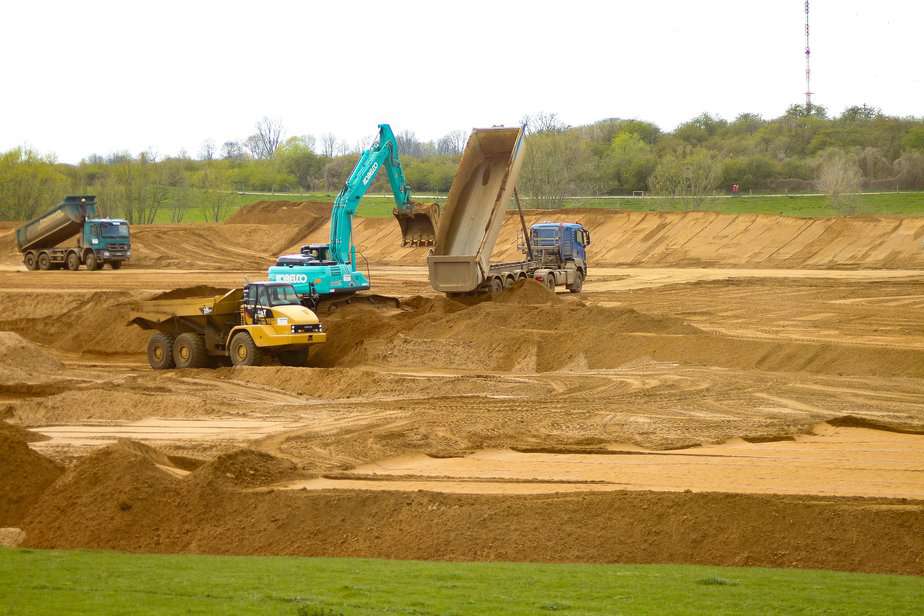
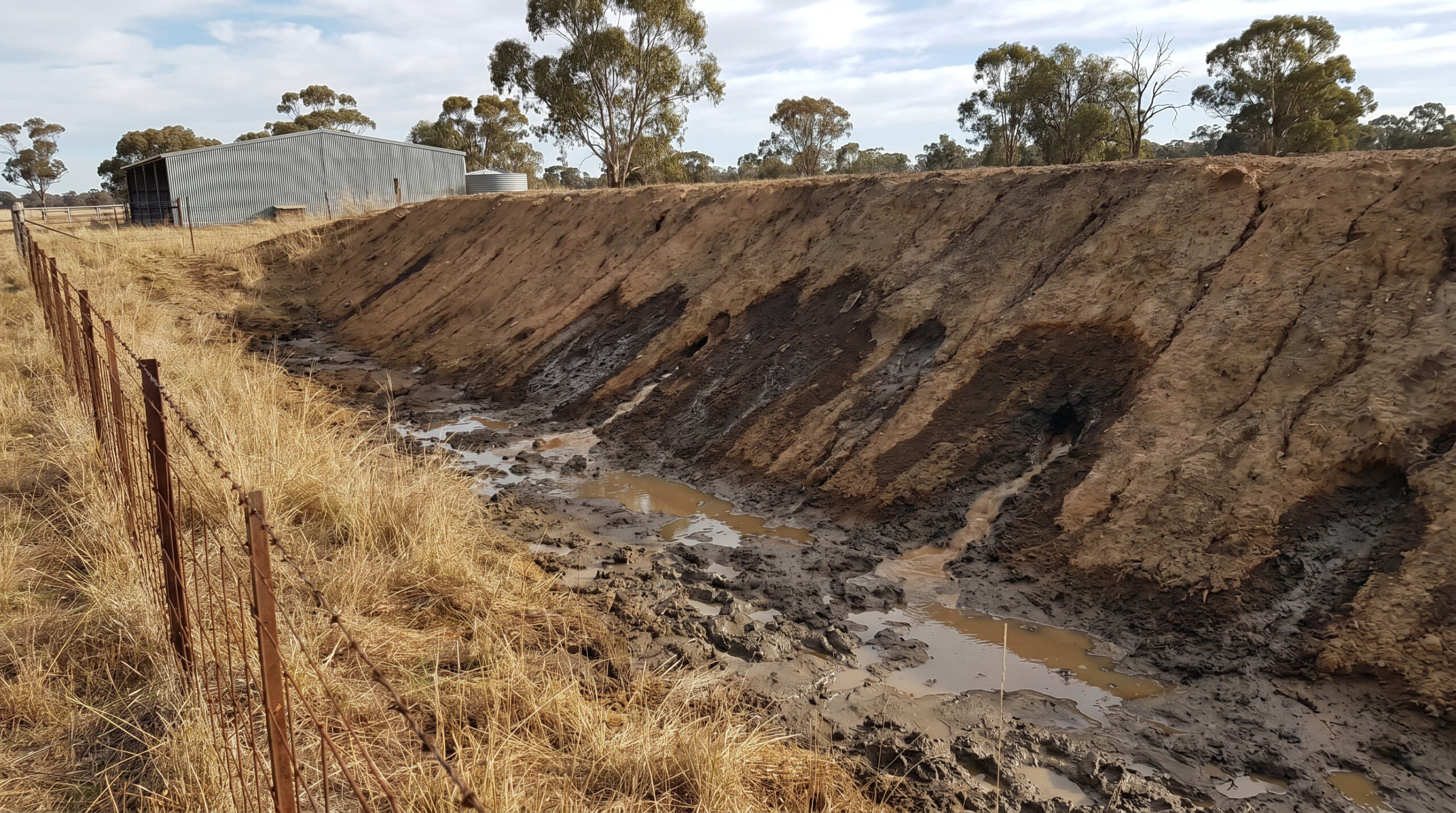
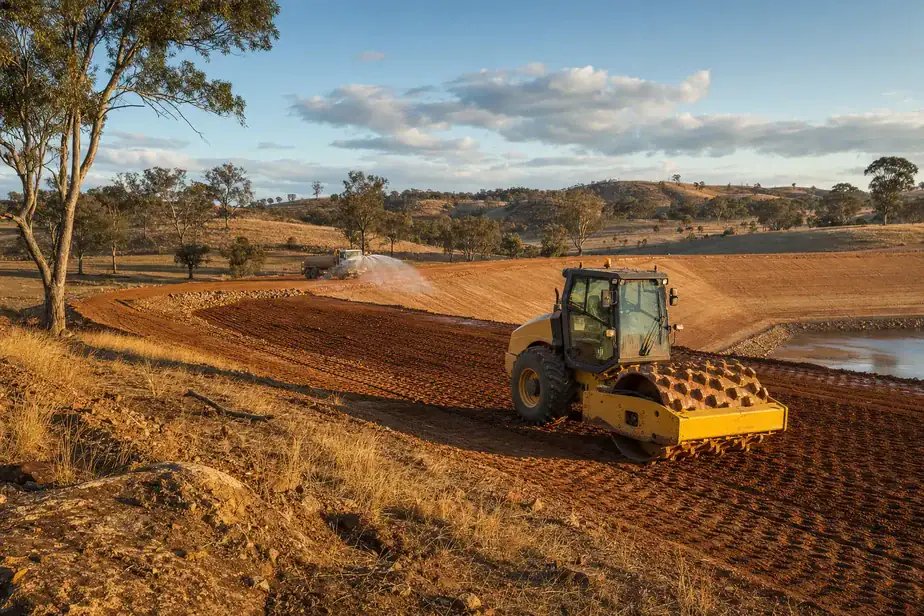
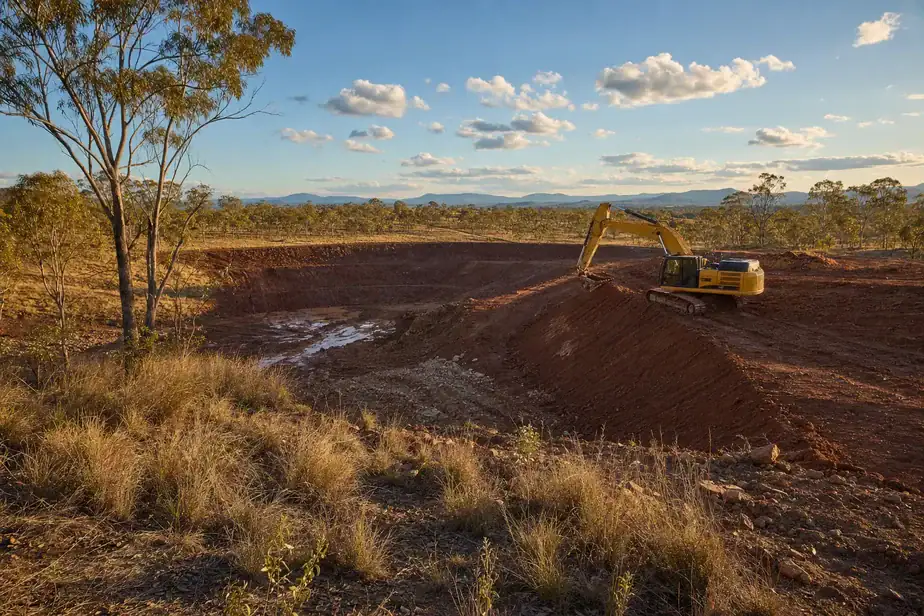
Big Ditch apprentice Kaleb Bakker in the new Kobelco 23 ton Geospec zero swing excavator stripping the dam wall and preparing it for Bentonite layering.
1. Strip dam wall
2. Shape banks
3. Cut silt trap trench No.1
4. Build a bridge
5. Get over it
Day Two will involve layering 19 tonnes of Bentonite into the wall to make this leaky old dam finally hold water
Our client is the man behind the world famous Rhino Roof Racks
This week we’re in Sydney to fix the dam of the man behind Rhino Roof racks at Razorback – about an hour south of Sydney.
But the highlight of the day was going out for a site visit to the Buddhist Monastery at Picton to have a look at their very beautiful, but very leaky Buddhist dam.
This dam would have to be the most beautiful dam I have ever seen in 15 years of looking at dams globally. It is absolutely world-class with cutting edge design that redefines what a dam can be. The dam, called Muchalinda, is a spiritual place where Buddhists gather to kneel in prayer around the dam
It is also absolutely huge at 15 megalitres – but unfortunately – being built in a rocky environment – the Muchalinda is muchaleaky – and that’s what we’ve got to fix.
To give some context to this Buddhist dam, this 100-acre estate is only 50 mins from Sydney – sitting on top of a mountain – and the best offer they have had from developers so far is $100 million. But no sale. The very nice lady who is the client, and who owns the land and the dams – donated the 100 acres to the Buddhists – and says she will never ever sell. And why would you?
The surprise of the day was that I thought we were going to look at one leaky dam. But there are 3 leaky 15 megalitre dams – and each of the other two dams would have to be top 3 in the dams with natural beauty classification. Just stunning in scale, execution, and placement within the environment.
Second surprise of the day, well not really given that this retreat caters to Sydney eastern suburbs customers – there are a lot of very stylish late model Mercedes at this Buddhist Monastery.
Seems very appropriate in this $100 million setting of a Buddhist dam with billion dollar views
Many people ask the question – how big should my dam be?
The quick answer is – figure out how much water you need each year – then multiply it by 4.
Sounds simple right? But does it give you the right answer for a perfect dam size?
Well, here’s the rationale behind that simplistic formula
Let’s say I have a rural-based business that needs water all year round, and you have calculated you need 2.5 megalitres each year for operations, and it is also critical that you always have some water available – how big should my dam be?
This is how I come up with the answer to that question
Let’s assume you are a progressive environmentally knowledge person, and you understand that Australia loses 1.4 trillion litres of water straight up into the sky each year
Therefore, let’s assume that you have an evaporation management strategy and implementation plan – and you plan to introduce water plants to the dam to decrease evaporation losses by 90%.
If you implement this cheap organic evaporation strategy, it is important to consider the benefit lag
Massive evaporation savings won’t be realised for 2-3 years because that’s how long the organic evaporation barrier will take to establish full coverage across 90% of the dam surface
For the sake of this exercise, let’s also assume that the current long-term weather trends of decreasing precipitation (rain) and increasing temperatures will continue, and it is extremely critical that you never run out of water – you would plan dam storage based on the 1 to 4 formula
That simply means that for every 1 unit of water usage you require, you should have four units of storage – e.g. 2.5 megalitres of water required for operations translates to a dam with the ability to hold 10 megalitres of capacity
This figure is accurate for a couple of important reasons
According to collected data by government agencies, a naked water dam north of the Victoria/NSW border will turnover its full water volume 3 times in a year due to evaporation losses.
This figure increases the closer you get to Latitude 0° (the Equator).
In the example we are using of 2.5 megalitres water usage per year – you simply multiply usage (2.5) x expected evaporation losses (3)
This gives you 7.5 megalitres required.
But this means you have to capture and store 7.5mgl of water just to stay even.
It does not account for usage.
Usage has to be added back into the formula, and it looks like this:
2.5 mgl usage x factor of 3 for evap losses + usage required of 2.5 megalitres
This tells you that you need a dam capable of storing 10 megalitres
The 1 to 4 formula is over-engineeered to ensure that at no stage your water levels fall below 30%
If the water level drops below 30% capacity, water quality starts to decline
This formula is not an absolute.
It is a back of the envelope method for quick calculation. But that’s not everything
For precise calculations for the dam size, it becomes much more complicated, because local precipitation, wind & temperature history and trend-lines have to be incorporated into the formula
Also, each year the formula changes slightly because evaporation losses are lessened by the increasing effectiveness of the evaporation management strategies
For the first 3 years, evaporation is going to be a constant, although reducing the element of the dam size calculation.
These are the things I take into account when planning and designing long-term mission-critical sustainable water strategies
In the end, the answer to the question ‘how big my dam should be’ depends on how important water is to you and your operations.
For some, there is no more critical element
For others, such dam size calculations not that critical and the calculations above can be a little more relaxed.
So hope, that the question ‘how big should my dam be’ will trouble you no more.
The Parry Dam @ Kendall NSW. Completed 23 March 2020
Refurbishment is considered to be one of the most spread dam reconstruction methods and often used for dam repairs. This case study from our work routine is illustrating one example of applying this practice to save the dam.
The Parry Project was a dam refurbishment project for a 10-year-old leaky dam that refused to hold any water for longer than a few weeks. It’s essential to perform regular dam checks and maintenance to avoid such a situation. Still, it was possible to give a new life to this dam during this project.
The dam was cut into the side of a hill but was not originally sited properly into the surrounding topography, resulting in many steep angles that were visually unappealing and created a feeling of bad feng shui
After increasing the surface area significantly by moving the wall downhill and outward, we increased the volume of the dam from 1.5mgl to 3mgl by pulling out another 3 meters of depth from the dam base.
Then we used the fill that was extracted from the dam base to reduce the outside dam wall batter from 70 degrees to 30 degrees – which then enabled the manicuring of the surrounding landscape.
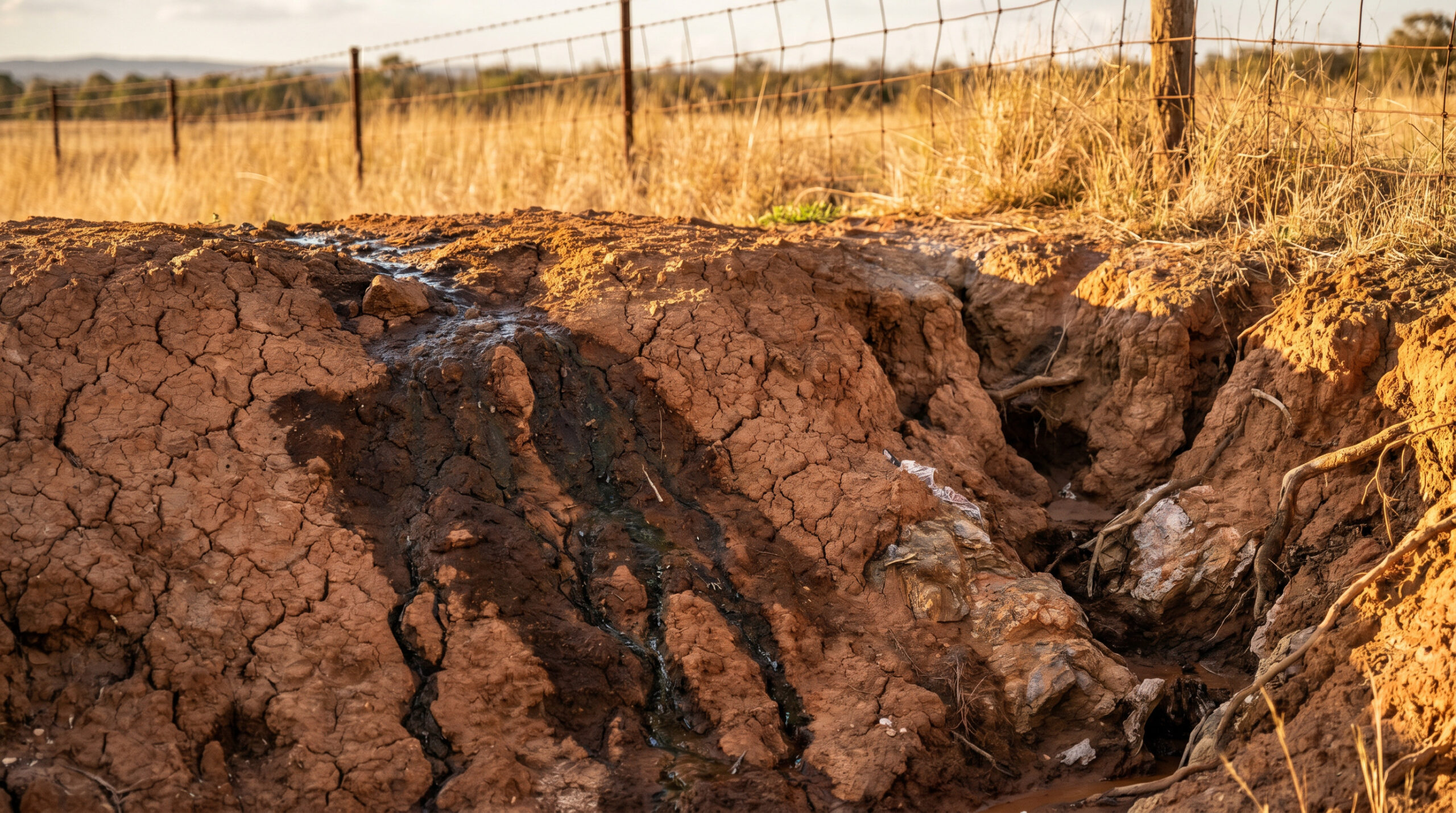
At the final stage of this dam refurbishment project, the leaky walls were stripped and ripped, and then repacked and re-compacted to give the dam a permanent non-porous seal.
We had a client who wanted to create a new dam around a small existing dam – and he asked if that was a good idea.
Long story short, the answer is no – because dams need separation from each other and ignoring this demand is one of the most common dam-building mistakes.
The reason being, in hydrology physics and the study of morphology (form & structure) of dam wall design, you need a wet side and a dry side.
This is because of the real world environmental concepts of transpiration & evapotranspiration. In dam wall design, we use the concept of bio-mimickery to successfully replicate these two processes to ensure dam wall stability
Transpiration is the process of water movement through a dam wall from the wet side to the dry side.
Evapotranspiration is the sum of transpiration plus evaporation
These concepts are relevant because water saturation is necessary for dam wall stability & structural integrity – but it needs constant slow movement through the dam wall to avoid settling.
A wet wall and a dry wall achieves this by drawing the water through the wall (transpiration) and disposing of it at the end of its journey as it exits the dry side (evapotranspiration)
When you have two wet sides and that’s what happens when you are joining dams, the water does not egress, and the wall will be subject to static saturation – and will eventually slump and collapse, so joining dams can turn into a complete disaster.
The most practical analogy is to imagine a swamp.
You will never see a hill or a mound in a swamp because the soil material in that swamp lacks integrity due to constant static saturation. Everything in a swamp reduces to the level of least integrity – which is the water level
What does all this mean?
It just means that you should put a swale system (growing area) between the two dams
This growing area will not only take advantage of the overflow, but it will also allow separation between the dams
Then healthy transpiration will take place, and your dam wall will be internally saturated and stable. It will also not suffer summer surface cracking due to the internal moisture contained in the wall
The depth to surface to volume ratio (DSV) is probably the most important aspect of successful dam design and that’s the parameter that answers the question how deep your dam should be .
If you get it wrong, the terrible effects are not immediately obvious.
But they will make you cry
So you better know how deep your dam should be in order to avoid them.
Let’s take the dam depth above as an example, because this dam is badly designed with regard to its DSV ratio
A bathymetric analysis of the current shape and depth shows that this dam is capable of losing $59,000 worth of water every year (bathymetry is the study of water depth)
To answer the question of how deep your dam should be, it’s necessary to conduct the calcualtions before the construction, otherwise, the consequences will be similar to the ones we can see on the example of this dam .
The current dam depth vs surface area vs volume ratio of .33 is causing the aquatic inversion layer (also known as the thermocline) to be in an abnormally low position relative to the water surface and the dam base – and is therefore causing excessive & significant water warming and loss through evapo transpiration
The lack of the dam depth is also causing the inversion layer to have an abnormally low thermal lapse rate – eg the lower depth is not as cold as it should be (the thermal lapse rate is the rate at which the temperature of water changes with depth – normally 3 degrees Celsius per metre on an exponential scale)
In basic terms – water becomes colder with depth, but warmer as it approaches the surface.
Evaporation happens when water molecules are heated to a higher temperature than their surrounding environment.
At this point, they start to detach from the water body and rise into the atmosphere and are lost – returning to earth eventually as rain.
That’s why it’s so important to know how deep your dam should be and properly calculate the dam depth beforehand to avoid these consequences.

As the sun shines – it heats the water to a certain depth – usually 1.5 metres. This is where the aquatic inversion layer exists in most water bodies.
All water between this level and the surface is subject to warming and therefore loss through evaporation. Most water below 1.5m depth is not.
Warm water (known as epilimnion), which is less dense, will sit on top of colder, denser, deeper water (known as hypolimnion) with a blanket-like impervious thermocline layer separating them.
Very little mixing of the warm water and the cold water occurs because of this aquatic stratification.
When you swim in a lake, you can feel the cold hypolimnion below the aquatic inversion layer – normally this occurs around your toes.
When you swim in the shallow end of a swimming pool, you don’t feel the aquatic inversion layer.
In shallow pools, this means that 100% of the water is heated up and would be lost to evaporation over a short period of time.
In lakes, the first 1.5 metres of water is warmed up, but many many metres beneath are not.
If the lake was 150 metres deep, only 1% of it’s total volume would ever be lost to evaporation.
This is why lakes do not dry up.
Inversion layers are a permanent and important feature of water with depth.
The dam being discussed is currently like a big teacup saucer, with 50% of the water contained in it when full being subject to evaporation.
This is best visually represented by the graphic on the left.

With a total depth of 3m and the inversion layer at 1.5m, this means the inversion layer is sitting in the middle of the depth axis, thereby exposing 50% of total volume to evaporation.
The dams current DSV value is .33
If the dam depth was 6m, its DSV value would be .16, and this would mean that evaporation losses would be reduced by 50%.
This would mean a saving of 59 megalitres of water per year.
Compare the dams below. Both contain the same volume of water.

The depth of water removed by evaporation will be much the same in both dams, but the total volume of water lost from the shallow dam will be significantly more.
The dam that is deeper and has steeper sides will retain water for longer – because the water will be cooler in this dam, thereby helping to reduce evaporation.
Evaporation is hard to measure precisely due to the number of factors that effect it – such as:
• air temperature
• water temperature
• latitude
• longitude
• tidal action
• surface area
• depth
• wind velocity
• turbidity
• currents
• temperature range
• humidity
However, a basic calculation for the dam depth will show that a water body with 100% of its total volume effected by high direct heat exposure will lose up to 2% of its total volume every day to evaporation.
This all means that this dam in its current configuration could lose its total volume every 50 days – or 7.3 times per year if it were to fill every time it emptied.
Given the dams total capacity of 16.1mgl – a total of 118.04 megalitres is capable of being lost purely to evaporation from this one dam.
In monetary terms, if one were to price water at $500 per megalitre – this would represent a financial loss of $59,000 each and every year for this dam due to the improper calculation of dam depth.
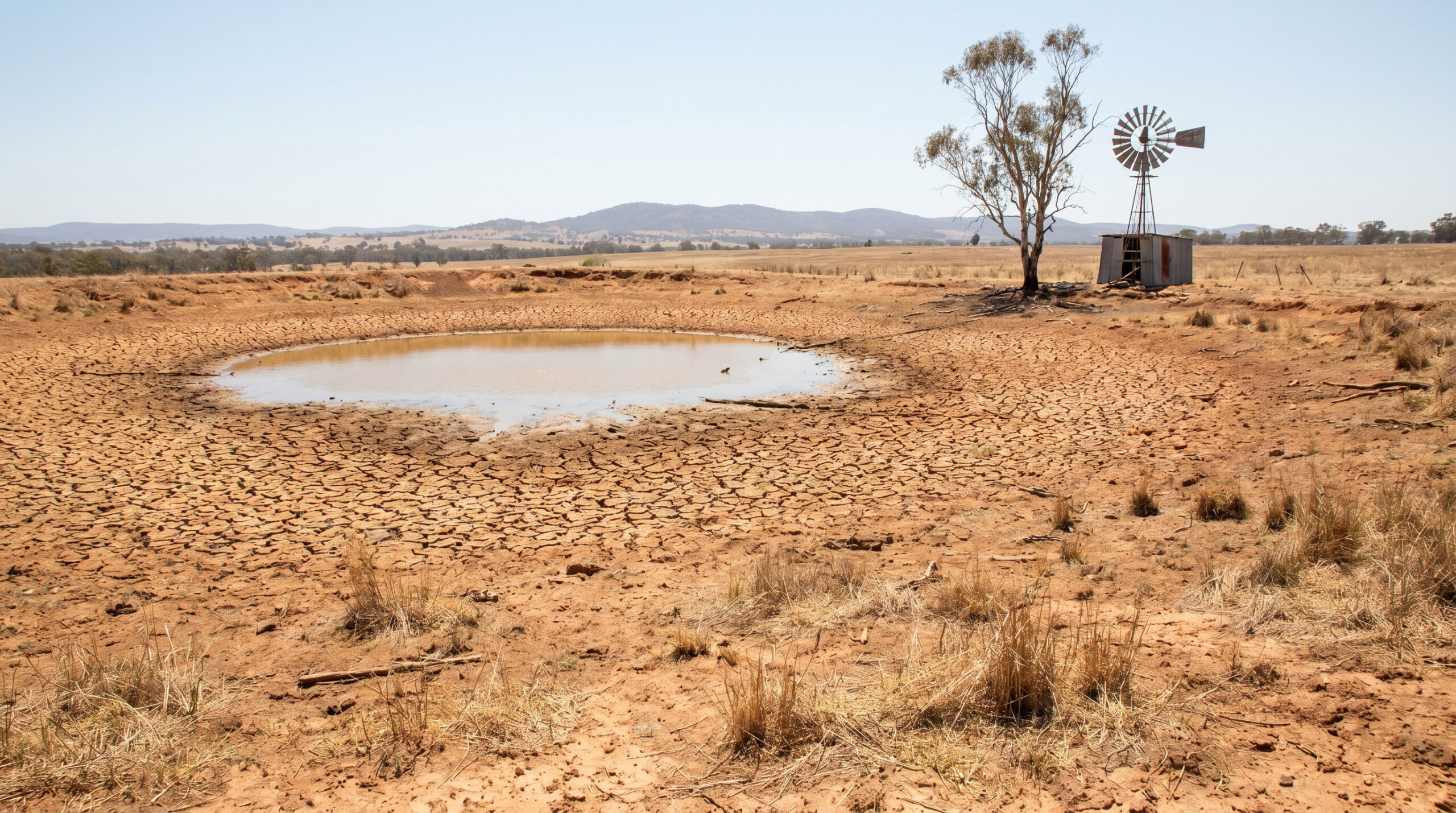
On 2 December 2019, the rural dam levels in NSW averaged 28.2%. This was a decrease of 0.7% since last week.
This indicates most rural farm dams will be empty by June 2020 unless significant rain events materialise

The total active storage in rural dams on 18 November 2019 was 29.6%. This was a decrease of 0.7% since last week.
These levels will decrease more rapidly over the December, January and February period.
If no significant rainfall is received, in a worst case scenario, these levels could reach zero by August next year. This would be a catastrophic situation for Australia if it occurs

The total active storage percentage of rural water supplies in NSW dams on 11 November 2019 was 30.3%. This was a decrease of 0.4% since last week.