


Short answer: Embankment dam filters are designed to control internal seepage and prevent the movement of fine soil particles that can lead to piping or failure. While primarily a safety feature, well-designed filters also support overall water retention and can reduce losses associated with uncontrolled seepage. Understanding filter function is foundational to effective dam design. …
Author Archives: Lindsey Angus Hughson

Dam Building
A Beginner’s Guide To Building Your First Earth Dam
Short answer: Building your first earth dam involves selecting a suitable site with impermeable soil, ...
Continue reading
Dam Building
Roy Hill Project: Delivering A Major Dam In Mining Country
Short answer: The Roy Hill project involved constructing a major water storage dam in the ...
Continue reading
Short answer: Estimating evaporation in semi-arid areas requires reliable methods suited to data-scarce environments, including pan evaporation, Penman-Monteith equations, remote sensing, and water balance approaches. Each method has different data requirements, accuracy levels, and practical trade-offs. Choosing the right method depends on available resources and the precision needed. Last updated: April 2026 | Author: Angus …
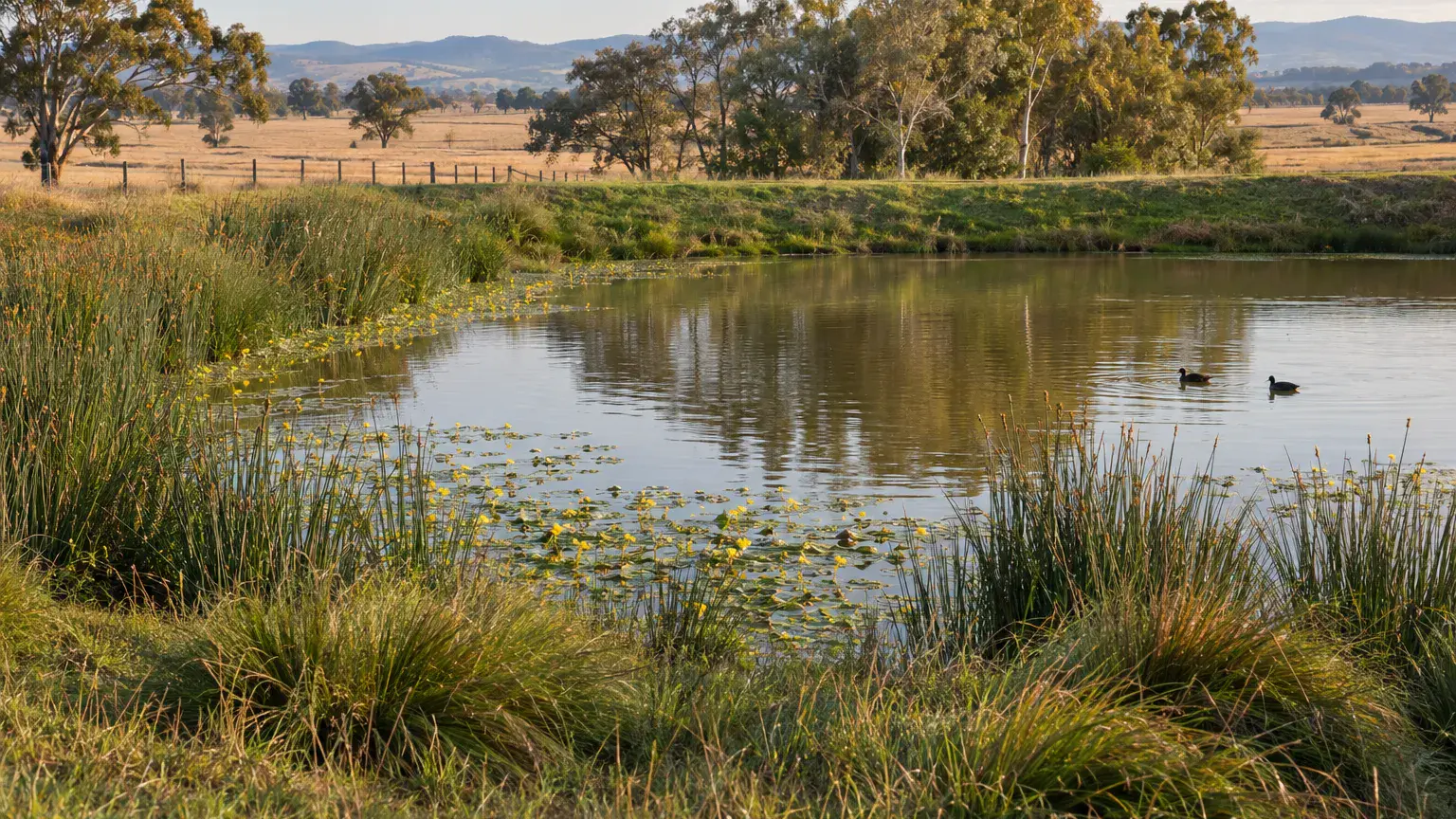
Dam plants matched to water depth: the native rushes, sedges and trees for each zone of a farm dam, the weeds to refuse, and what belongs on the wall.

Short answer: Breach mechanics determine how quickly and catastrophically a dam can fail once overtopping or internal erosion begins. Key factors include embankment material, water depth, and the rate at which the breach widens. Understanding these mechanics is essential for emergency planning and designing dams that can withstand extreme events. Last updated: April 2026 | …
Short answer: Breach mechanics describe the physical processes by which a dam embankment fails, typically through overtopping erosion or piping leading to progressive collapse. Understanding these mechanisms helps engineers design safer structures and develop credible flood inundation scenarios. Both theoretical models and field observations inform modern breach analysis. Last updated: April 2026 | Author: Angus …
Short answer: Air-bubble plume systems destratify farm dam water by pumping compressed air through diffusers at the dam floor, which rises and mixes the water column. This process increases dissolved oxygen, reduces harmful algal blooms, and improves overall water quality for livestock and irrigation. They are a cost-effective and low-maintenance solution for healthier farm dams. …

Short answer: EVAPCO shade balls are small, floating plastic balls that cover the surface of a dam or reservoir to dramatically reduce evaporation losses. By blocking sunlight and wind, they can cut evaporation by up to 80-90%, making them one of the most effective physical evaporation suppression tools available. They are particularly suited to smaller …

How to use bentonite to seal a dam: rip 600 mm, spread 30 kg/m², mix, compact, refill slowly. Tonnage, methods, cost.

Short answer: Soil permeability determines how quickly water moves through the ground beneath and around your dam, directly affecting seepage rates and water loss. High-permeability soils allow excessive leakage that can undermine dam effectiveness and stability. Understanding your soil’s permeability characteristics is the first step in selecting appropriate sealing methods and construction techniques. Last updated: …

Short answer: Nature-inspired solutions for dam evaporation control use floating plants, shade structures, and biomimicry techniques to significantly reduce water loss from farm dams. These approaches work with the natural environment rather than against it, cutting evaporation by up to 90% in some cases. They are especially effective in hot, dry Australian climates where evaporation …

Short answer: Whether you need evaporation management on your dam depends on your climate, dam size, and how critical that water supply is to your property. In hot, inland Australian regions, a farm dam can lose millions of litres per year to evaporation — making management strategies like covers or floating plants well worth the …

Short answer: Keeping birds off your dam requires a combination of deterrent systems including physical barriers, visual scare devices, and decoys to prevent damage to liners and water quality issues. The most effective approach uses multiple methods together, as birds quickly adapt to a single deterrent. Regular maintenance and repositioning of deterrents keeps them working …

Short answer: Fixing dam leaks starts with a thorough risk assessment to identify the source before selecting the right repair method. Options range from clay blankets and compaction to synthetic liners, depending on severity. Clear communication with clients about realistic outcomes and costs is essential throughout the process. Do polymer sealants work to fix a …

Short answer: Dam covers that actually work use purpose-built floating systems or rigid panels to physically block the water surface from sunlight and wind, cutting evaporation losses by up to 90%. The most effective covers are UV-resistant, durable, and designed to accommodate fluctuating water levels. Choosing the right cover depends on dam size, water use …

Short answer: Farm dams can become stunning landscape features in autumn as surrounding vegetation changes colour and reflects in the still water. Thoughtful planting of deciduous trees and native shrubs around a dam transforms it from a purely functional structure into a seasonal showpiece. This seasonal beauty also reminds us that well-built dams are long-term …

Short answer: The Crescent Head showcase dam build demonstrates what is possible when engineering expertise meets thoughtful design on the NSW Mid North Coast. This project combined strong structural construction with attractive finishing to create a dam that is both highly functional and a standout landscape feature. A Dam Fine Result: Our Crescent Head Showcase …

Short answer: Day 5 at Razorback marked the completion of a challenging dam repair project that required persistent problem-solving across multiple days of difficult conditions. The final stages focused on confirming the seal was holding and completing compaction of the repaired sections. The project demonstrated that even severely leaking dams can be successfully rehabilitated with …

Short answer: Traditional dam building techniques including careful clay selection, layered compaction, and hand-shaped spillways remain highly effective and are still widely used by experienced dam builders today. These time-tested methods have proven their reliability over decades of Australian agricultural history. Last updated: April 2026 | Author: Angus Hughson, Big Ditch Aquatecture While the dam …

Short answer: Sealing Razorback Dam required identifying the exact pathways through which water was escaping and applying targeted compaction and clay work to permanently stop the leaks. The project involved reworking sections of the dam wall and carefully monitoring the results to ensure a lasting seal. The Razorback Dam Seal works in progress. Day 3. …

Short answer: Day 2 at Razorback Dam focused on directly addressing the source of the leak, with the team excavating into the problem area and beginning the compaction work needed to turn the situation around. Progress was challenging due to soil conditions, but targeted intervention started to show results. Razorback Day 2: Tackling The Leak …

When you want to calculate how big your dam should be – use this simple formula. 4 units of storage for every 1 unit of required water

The Parry Project at Kendall NSW was a refurbishment of a 10 year old leaky dam that refused to hold any water for longer than a few weeks. The result was stunning

Is it a good idea to create a new dam around a small existing dam?
Long story short, the answer is no – because dams need separation from each other.
The reason being, in hydrology physics and the study of morphology (form and structure) of dam wall design, you need a wet side and a dry side to ensure wall stability
This is achieved through the process of transpiration

The afternoon sun framing Overflow Dam No.4 behind Dam No.2 @ the Herons Creek Project. Completed 19 March 2020

Infinity dams are modelled on infinity pools that you find in the most expensive resort hotels around the world – and these dams are our speciality

Short answer: A complete dam makeover transforms a tired, purely functional water storage into a genuine landscape asset through reshaping, lining, landscaping, and addition of features like rock walls or natural banks. A well-executed makeover also improves structural integrity and extends the dam’s usable life. This is the Arvidson No.2 Dam at Kundabung – and …

Short answer: The Arvidson Dam project delivered a quality water storage on challenging terrain where difficult soil conditions and topography required careful engineering and experienced machinery operation. Despite the site challenges, the finished dam achieved the client’s water storage goals and was built to last. The Arvidson Dam @ Kundabung NSW was constructed in early …

Dam overtopping can be non-destructive if the dam wall is designed with gentle rollover characteristics, so the flow over the wall doesn’t dig into the wall and cause wall collapse
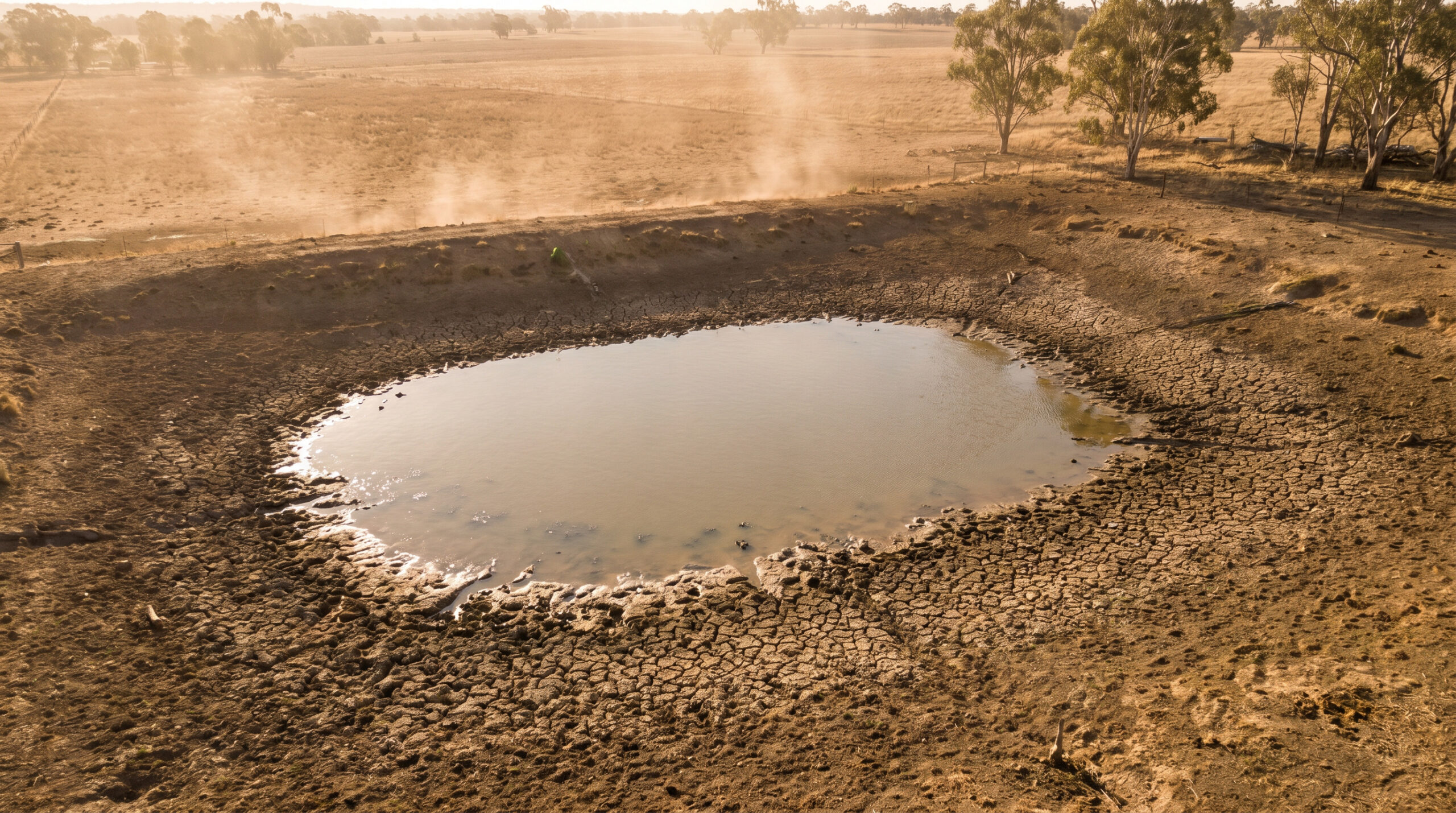
Australia loses over 1.4 trillion litres of water each year
Short answer: The Roy Hill project involved constructing a major water storage dam in the challenging conditions of Australia’s mining country, where extreme heat, remote logistics, and demanding timelines are all part of the job. The completed dam provides critical water infrastructure to support ongoing mining operations. Roy Hill Project: Delivering A Major Dam In …

Short answer: The dam news roundup for 18 January 2020 reflected ongoing water storage declines across eastern Australia, with the summer drought continuing to impact farm and urban water reserves alike. Sydney’s major dams were well below historical averages, and rural storages across NSW were approaching emergency levels. The situation underscored the urgent need for …

Short answer: The weekly dam level report for 15 January 2020 captured significant ongoing declines across NSW and Queensland storages as the summer drought continued to intensify. Both state and farm-level storages were trending downward, with little rainfall relief in the short-term forecast. Farmers were urged to actively manage water supplies and prepare contingency plans. …

Short answer: Staying up to date with the latest dam news is essential for farmers, water managers, and rural communities navigating water security challenges across Australia. This weekly roundup covers dam level updates, weather outlooks, policy developments, and practical tips for managing farm water supplies. Knowledge of current conditions helps landholders make better water management …

Short answer: Extreme heat events accelerate water loss from Australian dams through evaporation, while simultaneously increasing demand from livestock and irrigation, placing enormous pressure on storage reserves. Climate trends toward hotter and drier conditions mean this pressure is becoming a more regular challenge for rural water managers. Building larger, deeper, and better-sealed dams is the …

Short answer: Calculating the right depth for your farm dam is a critical step that balances maximising storage volume against minimising evaporation, construction cost, and safety risks. Deeper dams generally lose less water to evaporation relative to their volume, but construction costs and structural requirements increase with depth. Finding the sweet spot requires careful analysis …

Short answer: Sydney’s water catchment dams face an underappreciated contamination risk from metal sludge and industrial pollutants, threatening the quality of water supplies for millions of residents. Legacy mining activities and industrial runoff can introduce heavy metals into reservoir systems, requiring costly treatment to make water safe for consumption. Protecting catchment health is essential for …

Short answer: Dam storage levels continue their downward trend with no meaningful rainfall forecast to reverse the decline, placing increasing pressure on farmers and rural communities dependent on stored water. Without relief, water rationing and emergency supply measures may become necessary as storages approach critical thresholds. Long-term investment in water infrastructure remains the most effective …

Short answer: The Sienna Grange dam project showcases what can be achieved when expert planning, quality earthworks, and careful site management come together in a showcase rural dam build. From initial site assessment through to final compaction and spillway construction, every stage was executed to the highest standard. The result is a reliable, attractive water …

The best clay for sealing a dam is white clay because it will create a permanent seal. Avoid using red clay, because it is dispersive, and it ill let water travel through the wall and exit the dam

Short answer: As Sydney’s water storages decline during drought, water restrictions are making garden watering an activity restricted to those who can afford alternative supplies like tank water, bores, or recycled water systems. The disparity highlights broader questions about water equity and the need for urban water security planning. Access to reliable garden water is …

Short answer: A premium dam transformation can turn a basic water storage into a stunning landscape feature that also performs as a reliable, high-capacity water source. By combining quality engineering with thoughtful landscaping and finishing, farm dams can become centrepieces of a rural property. Luxury and function are not mutually exclusive when dam design is …
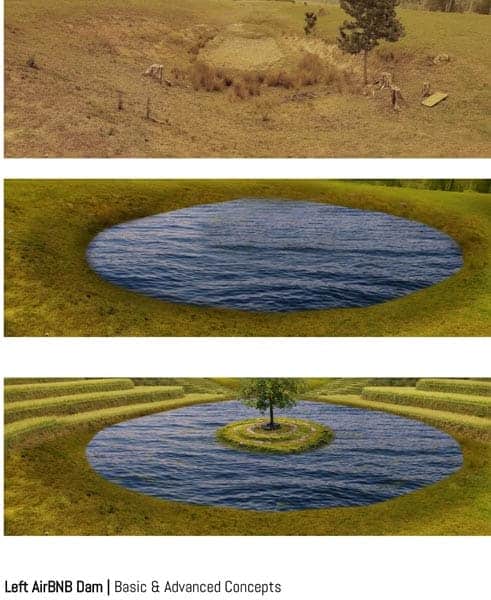
Short answer: Modern farm dam design combines proven engineering principles with innovative materials and techniques to deliver more reliable, longer-lasting water storage. Advances in sealing technology, spillway design, and catchment optimisation mean today’s dams can hold more water with less maintenance. Balancing innovation with proven reliability is the key to long-term water security on rural …

Short answer: Farmers across rural Australia are frustrated by a perceived lack of government support for farm water infrastructure, including dam construction and maintenance funding. While water security is critical to agricultural productivity, policy and funding gaps leave many landholders struggling to invest in adequate storage capacity. Greater government commitment to farm dam support could …

Short answer: Dam levels across rural Australia are declining at an alarming rate, with evaporation and livestock demand rapidly depleting water reserves that took years to accumulate. The speed of decline has caught many landholders off guard, highlighting the need for better dam design and larger storage capacity. Acting early to reduce losses and secure …

Short answer: Farm dam water levels across NSW have continued to fall as dry conditions persist without meaningful rainfall to replenish storages. Farmers relying on dam water for livestock and irrigation are facing increasing pressure as reserves dwindle. Proactive water management and investment in dam capacity are critical during these extended dry periods. NSW Farm …
Short answer: During drought conditions, rain can be erratically absent for months or even years, leaving farm dams critically low and rural water supplies stretched thin. When rainfall refuses to arrive, farmers must carefully manage existing water reserves, prioritise livestock needs, and consider supplementary water sources. Planning ahead with proper dam infrastructure is the most …
Short answer: Australia’s dam crisis has been exacerbated by years of political inaction, with successive governments failing to invest adequately in new water storage and harvesting infrastructure. Critics argue that short-term political thinking has left farmers and regional communities dangerously exposed to the impacts of prolonged drought. Decisive leadership and long-term water infrastructure planning are …
Short answer: The federal government signalled its intent to push for new dam construction across Australia as part of a long-term strategy to boost national water security. Proposed new dams would support agricultural productivity, regional water supply, and drought resilience for farming communities across multiple states. The initiative reignited debate about the environmental, economic, and …
Short answer: Dam storages across NSW slipped a further 0.3 percent in the latest weekly update, continuing the steady decline driven by ongoing drought and minimal catchment inflows. The incremental but persistent falls highlighted the severity of the long-term dry spell affecting the state’s water resources. Water authorities urged both urban and rural users to …
Short answer: Water authorities cracked down on illegal cannabis growers by cutting off access to dam water used for irrigating marijuana crops on rural properties. The action followed investigations that identified unlicensed water extraction from farm dams being used to support large-scale illegal cultivation operations. The crackdown reinforced that water licences and farm dam usage …
Short answer: Federal Water Minister David Littleproud came under scrutiny after being linked to allegations surrounding a $20 million water fraud scandal involving the Murray-Darling Basin water market. The controversy raised serious questions about the integrity of water licence management and the allocation of public water resources in Australia’s most important agricultural basin. Independent investigations …
Short answer: One outback town demonstrated remarkable community spirit by offering free water to drought-affected farmers and travellers during the water crisis. The generous response highlighted the solidarity of rural communities in the face of severe water shortages and reinforced the importance of strong local water storage infrastructure. Initiatives like this underscore why investing in …
Short answer: Kempsey and its surrounding communities faced growing concerns over the reliability of dam water supplies as prolonged drought reduced storage levels in local catchments. Water authorities warned that continued dry conditions could threaten the town’s water security, prompting calls for urgent investment in alternative supplies and storage augmentation. The situation underscored the need …
Short answer: Long-range weather forecasts for the 2019-20 summer offered a cautious glimmer of hope, with some models suggesting above-average rainfall was possible for parts of drought-affected Australia. However, forecasters cautioned that even above-average rain would need to be significant and widespread to meaningfully replenish depleted dams and dry catchments. Landowners were advised to maximise …
Short answer: A government-backed water program provided funding support to 30 landholders, enabling them to construct private dams and water storage infrastructure using public funds. The initiative aimed to boost on-farm water resilience in drought-affected regions by co-investing in critical rural water infrastructure. The program highlights the growing role of public-private partnerships in addressing Australia’s …
Short answer: Big Ditch Aquatecture has an important message for Australian landowners: your water security is your most valuable asset, and now is the time to invest in farm dam infrastructure. With drought conditions becoming more frequent and severe, having adequate on-farm water storage can be the difference between surviving and losing your livestock or …
Short answer: The NSW government moved to fast-track approvals for new dam construction as the drought emergency deepened across the state. Streamlined planning pathways aim to reduce red tape and enable landowners to build new water storage infrastructure more quickly. The initiative reflects growing recognition that on-farm water security is critical for agricultural resilience during …
Short answer: NSW dam levels in October 2019 continued to decline, with total storage across major catchments falling to some of the lowest levels recorded in decades. The ongoing drought left many rural towns and farming communities facing severe water shortages as summer approached. Water authorities and the NSW government urged urgent conservation measures and …
Short answer: Radio broadcaster Alan Jones delivered an emotional address highlighting the devastating impact of Australia’s prolonged drought on farming families and rural communities. Jones called for greater government action on water infrastructure, including new dam construction, to help farmers survive extended dry periods. His public breakdown drew widespread attention to the hardship facing rural …
Short answer: Australian landowners may be eligible to claim a refund on farm dam construction costs through government water infrastructure rebate programs. The process typically involves submitting invoices and evidence of completed works to the relevant state authority within a set timeframe. Engaging a reputable dam builder and keeping thorough records are essential steps to …
Short answer: Big Ditch Aquatecture’s October 2019 advertising poster showcases the company’s farm dam construction and earthmoving services for Australian landowners. The campaign highlights the importance of quality water storage infrastructure for rural properties facing ongoing drought challenges. Contact Big Ditch to discuss your dam, excavation, or water harvesting project. Farmer Porn October 2019 Advertising …
Short answer: NSW dam levels continued to fall through September 2019, with the latest update showing storages declining further across the state’s major catchments. Persistent dry conditions and below-average inflows pushed many dams to critically low levels, raising concerns for water security heading into summer. Farmers and water authorities were urged to conserve supplies and …
Short answer: Dam design at Armidale requires careful consideration of local topography, soil type, and catchment area to ensure reliable water storage throughout dry periods. Big Ditch Aquatecture brings specialist earthmoving expertise to design and construct dams that meet the specific needs of New England properties. A well-designed dam can provide years of reliable water …
Short answer: The NSW government announced $50 million in funding for drought projects aimed at supporting farmers and rural communities through the ongoing water crisis. Funding targets water infrastructure upgrades, including new dams, pipelines, and storage improvements across drought-affected regions. Eligible landholders can apply through relevant state government programs to access financial assistance. NSW Drought …
Short answer: Summer rainfall harvesting allows landowners to capture and store large volumes of water during heavy rain events, maximising every drop that falls on their property. Properly designed farm dams with adequate spillways and catchment areas can significantly boost on-farm water storage. Strategic earthworks and dam placement are key to making the most of …
Short answer: As of 17 September 2019, WaterNSW reported critically low dam storage levels across NSW, with most major catchments well below historical averages due to prolonged drought. Inflows remained minimal, and water restrictions were in place across many regional centres. The report highlighted the urgent need for improved water harvesting and storage solutions on …
Short answer: Dam construction faces a range of serious challenges including variable soil conditions, wet weather delays, managing groundwater during construction, achieving correct compaction, and designing effective spillways. Big Ditch Aquatecture tackles these challenges through experienced project management, the right equipment for each site, and decades of hands-on knowledge building dams across diverse Australian landscapes. …
Short answer: Dam buttresses are structural elements built into or against a dam wall to resist the enormous water pressure exerted by a full reservoir. They are built thick because the forces involved are immense — water weighs one tonne per cubic metre and a full dam exerts tremendous lateral and downward pressure on every …
Short answer: Moving large volumes of earth efficiently is both a science and an art, requiring experienced operators to maximise dozer blade loads, plan push distances, and sequence cuts to keep material moving continuously. The most productive earthmovers understand soil types, machine capability, and how to minimise wasted effort to achieve the best possible output …
Short answer: Day seven of the Arabella dam project took the crew to Tony’s property for continued earthmoving work, making steady progress despite it being a Sunday. Dam construction schedules often run through weekends to take advantage of good conditions and complete projects within client timelines. The day’s work contributed further to the growing dam …
Short answer: By day six of the Arabella dam project, the team faced challenging boggy ground conditions that threatened to slow progress significantly. Skilled machine operation and strategic management of wet areas allowed the crew to push through the difficult conditions and keep the project on track. Working through boggy ground requires patience, experience, and …
Short answer: Operating heavy earthmoving machines for dam construction is physically demanding, technically skilled work that keeps operators on their toes across rugged and unpredictable terrain. Experienced operators read the ground, manage machine loads, and make constant judgements to move earth efficiently while keeping themselves and their equipment safe. The job demands endurance, situational awareness, …
Short answer: Day one of the Arabella dam build marks the beginning of a significant earthmoving project, with the Big Ditch Aquatecture team mobilising equipment and establishing the site layout before cutting begins. Breaking ground involves stripping topsoil, setting out the dam wall footprint, and beginning the initial push of material that will eventually form …
Short answer: When Sydney’s dam levels fall significantly due to drought and heat, the city activates its desalination plant as an emergency supplement to maintain water supply security. The Kurnell desalination plant can produce up to 250 megalitres per day, providing a critical backup when Warragamba Dam and other catchments cannot meet demand alone. This …
Short answer: Extended periods of scorching heat accelerate evaporation from reservoirs and increase agricultural and municipal water demand simultaneously, putting pressure on water storages and triggering official restriction warnings. Water authorities issue these warnings to encourage early conservation before dam levels fall critically low. Proactive water management and demand reduction during heatwaves can prevent the …
Short answer: Large dams play a critical role in maintaining water supply during extreme heat events by storing significant volumes of water that buffer against temporary drought and high evaporation rates. The sheer mass of water stored in a large dam moderates temperature effects better than small storages, providing a more reliable supply buffer through …
Short answer: Underground coal mining can depressurize aquifers and intercept groundwater flows, causing farm dams and bores above the mine area to lose water or dry up entirely. This hidden water cost affects farmers who depend on reliable water storage, often without any visible surface disturbance to signal the problem. Affected landowners may have legal …
Short answer: Consistent dam maintenance and monitoring transformed previously unproductive land into a high-yielding farm by ensuring reliable water availability across all seasons. Regular checks identified leaks, sedimentation, and structural issues early, allowing timely repairs that kept the dam functioning at full capacity. With secure water supply, the farmer was able to achieve three harvests …
Short answer: Integrated water management in Myanmar involves coordinating surface water, groundwater, and rainwater harvesting to address both agricultural and community water needs across diverse landscapes. Projects in Myanmar often combine dam construction, irrigation channel networks, and community training to build long-term water security. Effective integrated approaches help rural communities adapt to seasonal rainfall variability …
Short answer: Some landowners dream beyond standard farm dam sizes, envisioning large-scale water storage that could transform their property’s productivity and resilience. These ambitious water projects require careful planning, engineering expertise, and significant earthmoving resources to execute successfully. Big Ditch Aquatecture works with visionary clients to turn outsized water ambitions into practical, functional reality. Dreaming …
Short answer: Hydroelectric dams often perform differently in winter depending on location, with some experiencing reduced generation due to freezing temperatures, ice formation, or lower rainfall, while others benefit from increased snowmelt inflows in spring. Cold climates can affect turbine efficiency, water viscosity, and structural components. Understanding seasonal performance is essential for grid operators managing …
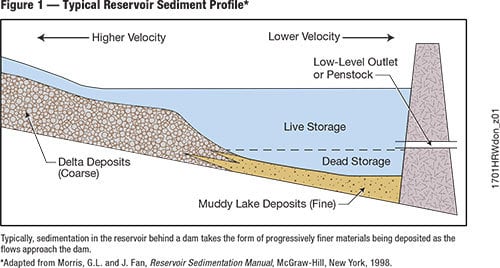
Short answer: Dead storage is the volume of water in a dam that sits below the outlet pipe and cannot be extracted under normal operation. It matters because it represents water you cannot access during dry periods, affects how you plan usable capacity, and can accumulate sediment over time. Understanding dead storage helps farmers design …
Short answer: While Hoover Dam is one of the most engineered and monitored structures in the world, no dam is entirely immune to failure. Potential risks include extreme flooding beyond design capacity, seismic activity, concrete degradation, and operational failures. Regular inspections and modern safety upgrades have kept Hoover Dam in good condition, but experts continue …
Short answer: Preparing a Caterpillar D7E dozer for a heavy dam-building season involves thorough mechanical inspection, servicing tracks and undercarriage, checking hydraulics, and replacing worn cutting edges on the blade. Proper preparation reduces costly breakdowns on remote job sites and ensures the machine performs reliably through months of intensive earthmoving work. Big Ditch Aquatecture takes …

Short answer: A farm dam can be converted into a natural swimming pool by improving water quality, managing aquatic plants, and installing simple filtration or aeration systems. The key is reducing nutrients that feed algae while encouraging beneficial plants and organisms that keep the water clear. With the right design, a farm dam can provide …

Short answer: Big Ditch Aquatecture successfully completed a large-scale dam construction project for avocado grower Josh McMillan at Comboyne, NSW. The finished dam wall measures 50m wide by 150m long by 5m deep, providing reliable water storage for the McMillan family’s avocado operation. The project used two Caterpillar D7 bulldozers and a 20-tonne excavator, delivering …