

Short answer: Sealing a leaky dam with bentonite involves applying this highly expansive clay mineral to the dam floor and walls where water is escaping. Bentonite swells when wet, filling cracks and voids to create a low-permeability barrier that significantly reduces seepage. With the right preparation and application method, bentonite can restore a leaking dam to effective working condition.
Last updated: April 2026 | Author: Angus Hughson, Big Ditch Aquatecture
📋 Quick Answer
Earth dam repair requires professional diagnosis before any repair work begins. The most common repair needs are clay core failures, compaction defects, tree root damage, animal burrowing, and settlement cracking. Most leaking dams can be repaired for 40–60% of the cost of a full rebuild. Polymer sealants do not work in earth dam conditions and should be avoided.
Bentonite needs to be applied in a very precise way to ensure it works effectively and permanently
The optimal result of using bentonite to seal a dam properly is achieved when the walls and base need to be 6-way cross ripped down to 600mm
Then the Bentonite has to be spread over all areas requiring sealing at a rate of 30kgs per sqm
Then the Bentonite needs to be ripped as per step one to get it integrated into the dam wall & base clay
Then the ripped area needs to be final trimmed and smoothed with a mud bucket
Then the whole area that has had Bentonite applied to it has to be compacted with at least 6 passes on each square meter.
You can use an excavator for compaction. A pad foot roller is not required.
Then the dam needs to be filled slowly to allow the Bentonite to expand 400 times its original molecular size
This swelling is what creates the permanent seal
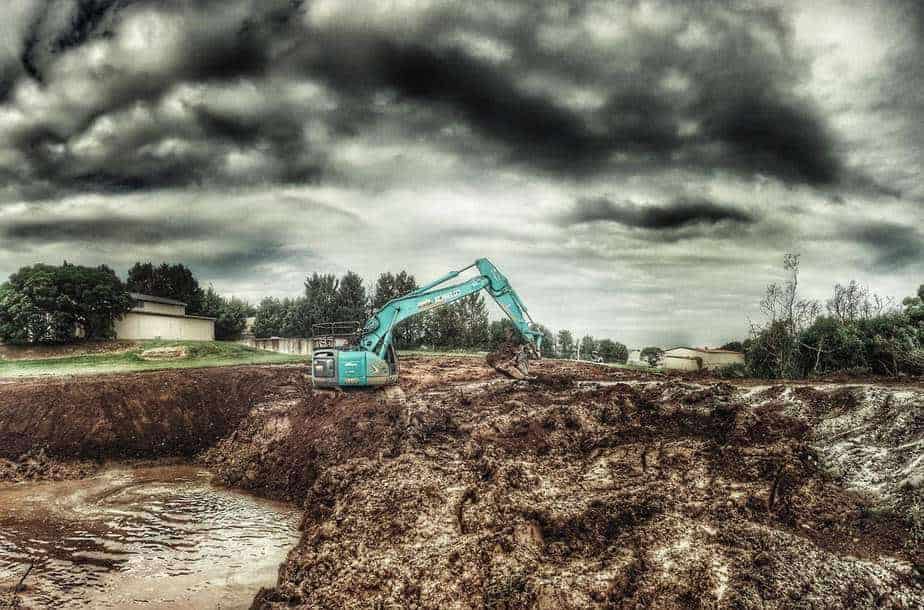
Important things to note when using bentonite to seal a dam properly
The Bentonite must be integrated into the clay.
If you just apply Bentonite to seal a dam on the surface, when it swells, it has no voids to fill and will be a waste of your money
Measure the dam – width x length x depth – this will give you the total square meters.
Multiply this number by 30 – and this is the amount of Bentonite required to seal your dam in kilograms
We sell Bentonite to seal a dam, and we call also apply it for you.
Contact us for a free quote