
an introduction to bentonite Clay

Dam sealing with bentonite works because sodium bentonite swells 10–15 times its dry volume when hydrated, forming a low-permeability clay seal across the dam floor and walls. On a leaking farm dam we typically apply 5–10 kg/m² of granular sodium bentonite, harrowed into the top 100 mm of subgrade and then re-wet so the clay platelets close over the seepage paths.

Bentonite or bentonite clay is sometimes called the ‘mineral of a thousand uses’ and is characterised by its ability to act as a natural glue or bond when added to water.

When it comes to fixing a leaking farm dam in Australian conditions, bentonite is the most cost-effective natural sealant we have — provided the subgrade has at least 15% fine clay to bond with. On pure sand or fractured rock it will not hold without an underlayer.

If you are building a new dam from scratch rather than sealing an existing one, our farm dam construction guide walks through the full six-stage build process.
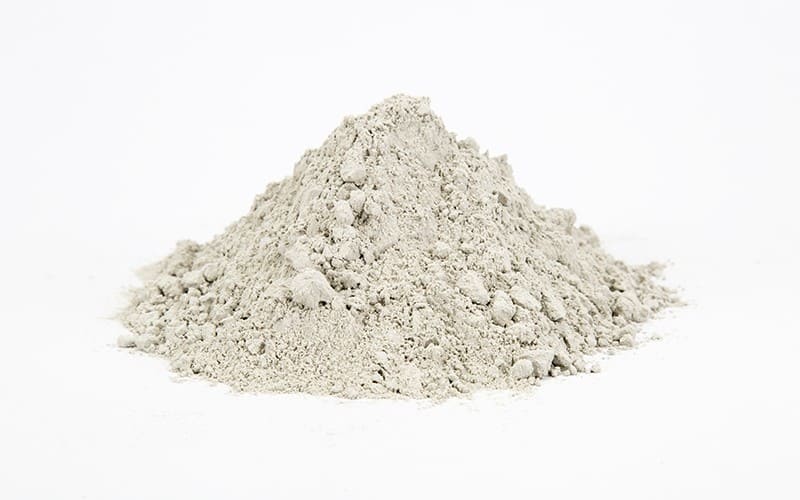
bentonite overview

Alternative names: 

Smectitic clay, Fullers Earth

Bentonite clay consist mainly of smectite minerals, of which the most common mineral species is montmorillonite.

A general formula for montmorillonite is (1/2Ca, Na)0.7(Al,Mg,Fe)4[(Si,Al)8O20](OH)4.nH2O

The montmorillonite minerals are products of volcanism and hydrothermal activity and are composed of hydrous aluminum silicates in the form of extremely small particles – and they take up water, causing swelling, and change the interlayer spacing according to the mineral variety.  

Montmorillonites are the principal constituents of bentonite and fuller’s earth.

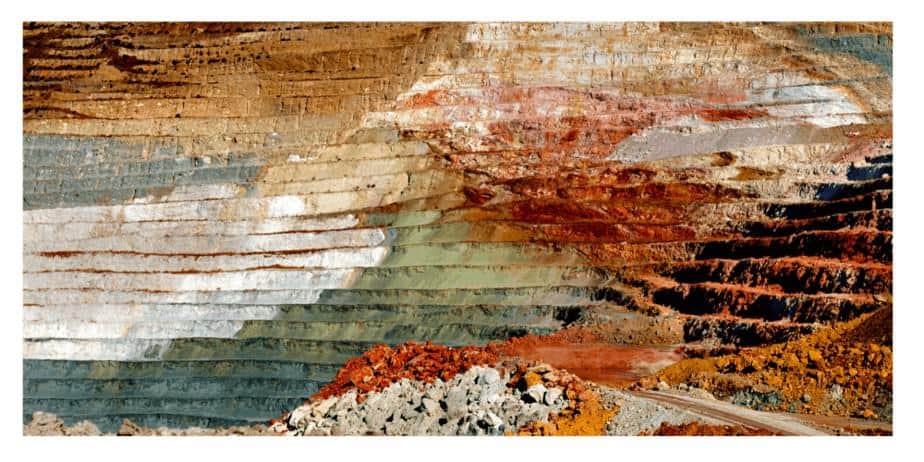
Bentonite occurs in rocks that were deposited in the Ordovician to Neogene periods (about 488.3 to 2.6 million years ago) and is formed by decomposition of volcanic ash or tuff, or sometimes from other igneous or sedimentary rocks. Andesitic to rhyolitic volcanic rocks are the most common primary source.

The final chemical character of the bentonite is dependent on the combined influences of the chemistry of the primary rock, the environment in which it was deposited and its post-formation history.

Bentonite is a very plastic clay that swells markedly in response to the addition of water.

This swelling property makes Bentonite useful as a sealant, since it provides a self-sealing, low permeability barrier. We call it bentonite for dam sealing.

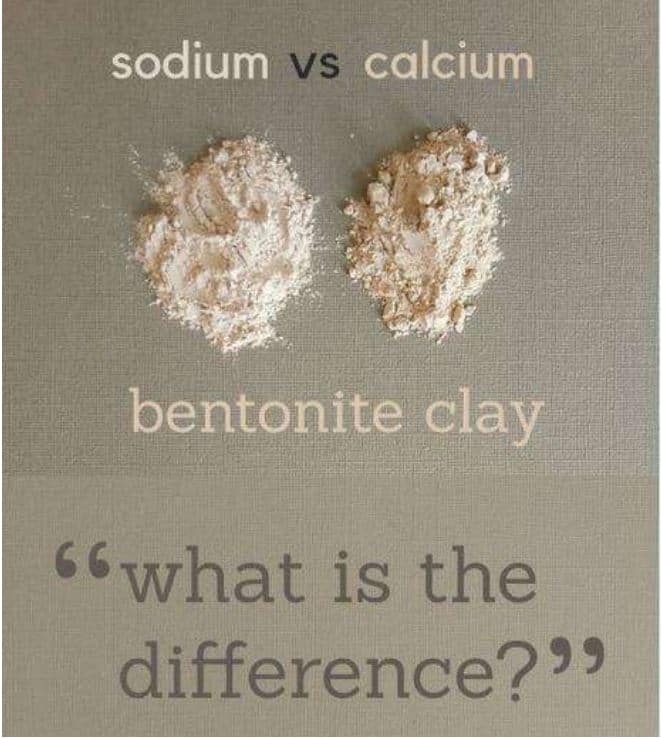
There are three main types of bentonite:

  • high swelling (sodium)
  • low swelling (calcium)
  • moderate swelling (intermediate sodium-calcium) bentonite.

SODIUM bentonite

Sodium bentonite absorbs water aggressively, swelling 10–15 times its original volume and forming a continuous gel layer that drops the hydraulic conductivity of the dam floor to around 1×10⁻⁹ m/s — about the same as a clay-core engineered dam wall. That is why it is the only bentonite type we recommend for sealing leaking farm dams in Queensland and New South Wales.

For specification purposes, granular sodium bentonite used in dam sealing should meet the swell-index and fluid-loss thresholds set out in AS 1289.3.6.3-2003 — Soil classification tests (Method for determination of the soil particle size distribution by hydrometer) and the CSIRO guidance on clay seals for earthen embankments published by CSIRO.

Outside dam work, sodium bentonite is also used in foundry sands, drilling muds, cement, ceramics and as a fining agent in winemaking — but those are completely different products at a different particle size to the dam-grade granular product we lay down.

Sodium bentonite forms in marine sedimentary basins adjacent to intermediate volcanic sources, which is why the highest-quality deposits sit in Wyoming (USA) and parts of central Queensland.

CALCIUM bentonite

Calcium bentonites are non-swelling and break down to a finely granular aggregate sometimes called fuller’s earth. They only swell to roughly 2–3 times their dry volume — nowhere near the 10–15× of sodium bentonite — which makes them unsuitable as a primary dam sealant.

If a contractor offers you calcium bentonite for sealing a leaking dam, walk away. You will pay for the spread and lose the dam volume to evaporation while the seal underperforms. The only legitimate dam use for calcium bentonite is as a dust-binder during construction, not as a permeability barrier.

Calcium bentonite clay is also a popular ingredient in skincare products because of its absorbent properties — useful in a face mask, useless in a 6 ML stock dam.

the history of bentonite

Bentonite has been used for therapeutic and cosmetic purposes since approximately 2500BC.

It has been known as a healing clay for centuries among indigenous peoples from Australia, the Andes and Central Africa. The first recorded use can be traced back to ancient Mesopotamia. It is totally natural and well known for its detoxification properties, especially when used on the skin

People use the clay to detoxify the body, improve digestion and improve skin tone.

In Iran, the clay is used as a hair cleanser and softener.

Bentonite clay has displayed strong detoxifying properties in clinical trials and is rich in nutrients like calcium, magnesium, silica, sodium, iron and potassium.

The molecular structure of bentonite clay is responsible for its detoxification properties

When the clay becomes hydrated, electrical and molecular components of the clay rapidly enlarge and produce an electrical charge.

This allows the clay to ‘swell’ like a porous sponge and then work to draw out toxins from the skin and body.

Bentonite clay is named after Fort Benton in Wyoming, where the largest known deposit of bentonite was found.

COMMERCIAL BENTONITE PRODUCTION

The commercial production of the Wyoming deposits in the United States began in the 1920s and in Europe about 10 years later, first in Bavaria (Germany) and then in many other countries.

An important step was the modification of bentonites with soda to give alkali- or soda-activated bentonites.

Soda-activation transformed German bentonites into materials similar to their Wyoming counterparts.

ECONOMIC FACTORS

Bentonite is produced in many countries and, in some, the industry is well-established, large-scale, and has a high profile (e.g. sodium-bentonite in the USA).

Consumption of bentonite is closely linked to global economic activity.

Get Dam Sealer From a Team With Years of Dam Building Experience

If your dam has seepage issues, getting a proper dam sealer is your best bet if you want to fix it. Our team can provide everything you need, from the materials to the repairs. We can also help you build dams if you want to expand your water harvesting. Choose Big Ditch Aquatecture for an experienced dam-building team.

Everything You Should Know About Bentonite Dam Sealer

Sometimes called the ‘mineral of a thousand uses’, bentonite for dams is a wondrous material with many interesting properties. Here are some interesting facts about this clay, including why it is such an ideal solution for sealing dams:

  • Bentonite acts as a natural glue when mixed with water. This trait comes from bentonite’s ability to absorb substantial amounts of water, which turns it into a substance that’s effective as a sealant and a barrier that becomes hard to penetrate.
  • Commercial production of the clay started in the 1920s. Wyoming deposits in the United States were the first to engage in commercial production, with Bavaria in Germany being the first European country to do it ten years later. Since then, commercial production has spread all over the world, with the mineral seeing widespread use from dams to beauty products.
  • The first known cases of bentonite for cosmetics dates back as far as 2500BC. According to researchers, the first cases of use were in Mesopotamia, where they often used the clay for its well-known detoxification properties on the skin. Other countries such as Iran focused on using it as a hair cleanser or softener. Australia’s indigenous people have counted on it as a healing clay for centuries.
  • Bentonite – specifically activated bentonite – sees widespread use in winemaking. Bentonite is an effective tool for correcting protein instability and can even help prevent cloudiness in the wine. It can do this because it is a good fining agent for general use.
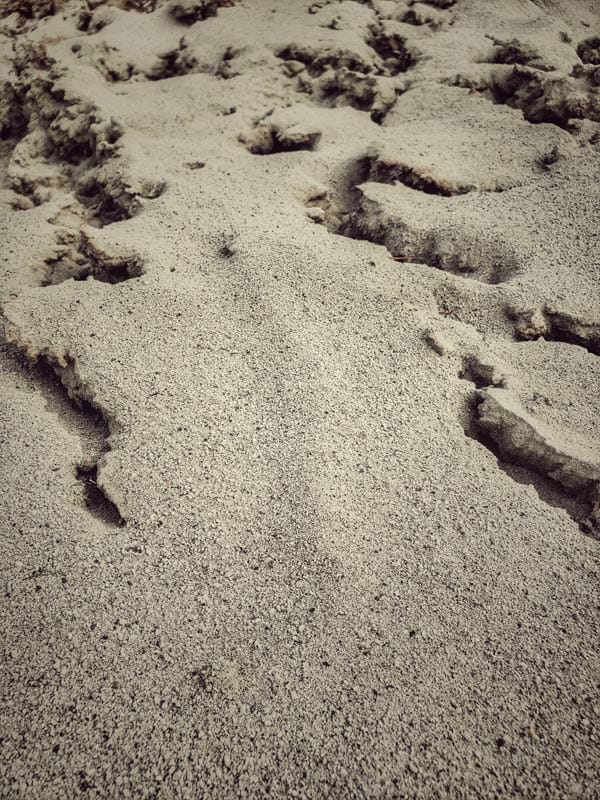
Big Ditch Aquatecture. Bentonite spread on dam wall

Different Types of Bentonite Clay for Dams and Other Uses

As with most naturally occurring minerals, bentonite takes on different forms that all have somewhat distinct properties. Here are the diverse types of bentonite clays applicable to dam sealing and why they differ:

Sodium Bentonite
  • The first is high swelling bentonite – sodium bentonite. As is clear by the name, sodium bentonite can absorb massive quantities of water, which in turn swells it to a much larger volume than originally present. This form of bentonite is the most used dam sealing variant. It forms adjacent to volcanic sources in marine sedimentary basins.
  • The second is moderate swelling bentonite – sodium-calcium bentonite. Commonly used in winemaking, this version of bentonite has a high proportion of exchangeable calcium and sodium and can provide absorption with a moderate increase in volume due to swelling.
  • The last is low swelling bentonite – calcium bentonite. Calcium bentonite can still absorb water, but it does not swell nearly as much as sodium bentonite. It can break down into a granular – almost powder-like – substance which people use as an absorbent clay in skincare products.

Why Trust Our Team When You Need Bentonite Clay for Sealing Dams

Lindsey Hughson has been building and sealing farm dams across Queensland and northern New South Wales for over 20 years, with more than 320 dams built. On a 6 ML stock dam near Roma in late 2023, the property owner had lost roughly 40 mm of waterline per day through a porous clay base. We laid 7 kg/m² of granular sodium bentonite, harrowed it into the top 100 mm of subgrade with a 3-tonne tractor, and re-flooded the dam. Seepage dropped to less than 5 mm per day within three weeks — the dam is still holding water two years on.

We know where to source the right dam-grade sodium bentonite and we are transparent about when it will not work. If your subgrade is fractured rock or pure sand, we will tell you to consider a compacted clay liner or polymer underlay instead — we will not sell you a bentonite spread that the soil cannot bond with. For more on why superabsorbent polymers are not a substitute for bentonite on most farm dams, we have written extensively about it. If you are not sure what your dam needs, get in touch with Big Ditch and we will assess the site before quoting.

Not sure whether bentonite is the right seal for your dam? Book a site inspection with Big Ditch and we will assess your subgrade before you commit to any earthworks.