

Short answer: The largest dam in the world by installed power capacity is China’s Three Gorges Dam at 22,500 MW. The next biggest are Baihetan (16,000 MW), Itaipu (14,000 MW), Xiluodu (13,860 MW) and Belo Monte (11,233 MW). The top 10 hydroelectric dams collectively generate more than 124 gigawatts — roughly five times Australia’s entire grid demand.
Updated June 2026 with verified installed-capacity figures from each operating authority and the International Hydropower Association.
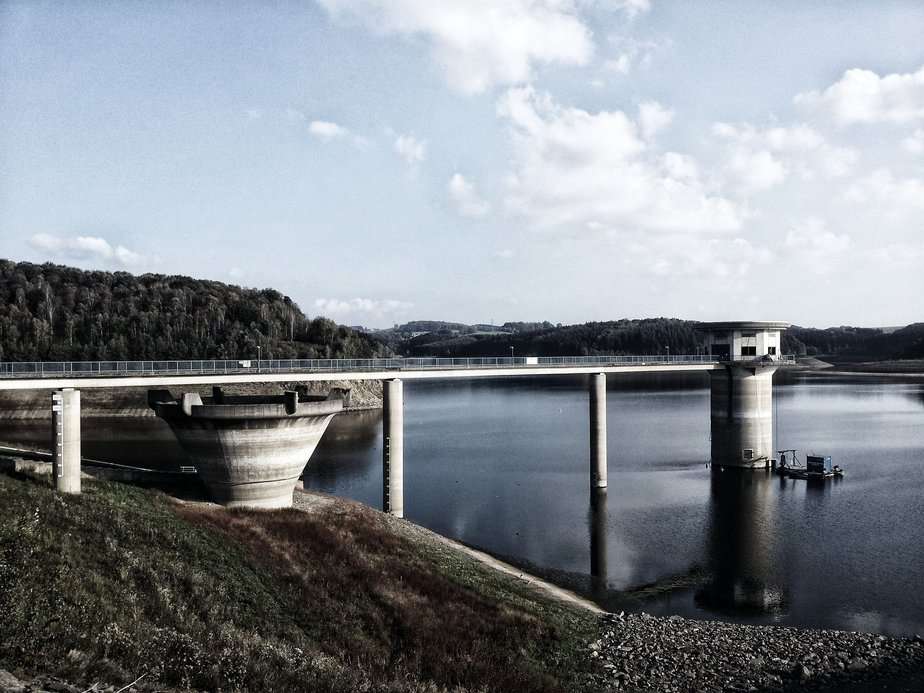
The world’s 10 biggest dams by installed capacity
The list below ranks the largest dams in the world by installed hydroelectric power capacity in megawatts (MW). One megawatt equals one million watts — enough power for roughly 800 average homes. Installed capacity is the maximum power output the dam’s turbines can generate at any moment, not annual energy production. Capacities are sourced from each dam’s operating authority and the International Hydropower Association’s 2025 status report.
| Rank | Dam | Country | River | Installed capacity (MW) | First operation |
|---|---|---|---|---|---|
| 1 | Three Gorges Dam | China | Yangtze | 22,500 | 2008 |
| 2 | Baihetan Dam | China | Jinsha | 16,000 | 2022 |
| 3 | Itaipu Dam | Brazil / Paraguay | Paraná | 14,000 | 1984 |
| 4 | Xiluodu Dam | China | Jinsha | 13,860 | 2014 |
| 5 | Belo Monte Dam | Brazil | Xingu | 11,233 | 2016 |
| 6 | Guri Dam | Venezuela | Caroní | 10,235 | 1978 |
| 7 | Wudongde Dam | China | Jinsha | 10,200 | 2020 |
| 8 | Tucuruí Dam | Brazil | Tocantins | 8,370 | 1984 |
| 9 | Grand Coulee Dam | United States | Columbia | 6,809 | 1942 |
| 10 | Longtan Dam | China | Hongshui | 6,426 | 2007 |
1. Three Gorges Dam — China (22,500 MW)
The Three Gorges Dam on the Yangtze River is the largest hydroelectric power station in the world. Its 32 turbines have a combined installed capacity of 22,500 MW, producing about 95 TWh of electricity annually. The 181-metre-high concrete gravity dam stretches 2,335 metres across the Yangtze and was fully commissioned in 2012. Beyond power generation, the dam controls catastrophic Yangtze floods and lifts shipping costs along the river by enabling ocean-going vessels to reach inland Chongqing.
2. Baihetan Dam — China (16,000 MW)
Baihetan came fully online in 2022 and is now the second-largest hydroelectric power station in the world. The 289-metre-high arch dam on the Jinsha River uses sixteen 1,000 MW turbines — the largest single-unit turbines ever built. Baihetan’s annual generation of around 62 TWh displaces coal-fired power across western China and stabilises the country’s renewables-heavy grid.
3. Itaipu Dam — Brazil and Paraguay (14,000 MW)
The Itaipu Dam on the Paraná River is a binational hydroelectric project shared between Brazil and Paraguay. Completed in 1984 with a final capacity uprating to 14,000 MW across 20 turbines, Itaipu held the world title until Three Gorges came online. The dam set a single-year generation record of 103.1 TWh in 2016 and still supplies roughly 8.6% of Brazil’s and 86% of Paraguay’s electricity.
4. Xiluodu Dam — China (13,860 MW)
The Xiluodu Dam is a 285.5-metre-high concrete arch dam on the Jinsha River. Commissioned progressively from 2013 to 2014, its 18 turbines deliver 13,860 MW of installed capacity. Xiluodu also performs heavy-duty flood control and sediment management for the Yangtze cascade downstream — its reservoir traps an estimated 35–40% of the upstream sediment load that previously reached Three Gorges.
5. Belo Monte Dam — Brazil (11,233 MW)
Belo Monte on the Xingu River in northern Brazil reached full capacity in 2019 with 18 turbines totalling 11,233 MW. It is the second-largest hydroelectric facility in South America and supplies power for roughly 60 million Brazilians. The project was contentious — indigenous communities and environmental groups opposed it for over two decades — and remains one of the most-scrutinised hydropower developments in modern history.
6. Guri Dam — Venezuela (10,235 MW)
The Guri Dam (officially the Simón Bolívar Hydroelectric Plant) on the Caroní River anchors Venezuela’s national grid. Its 162-metre-high embankment supports 10,235 MW of installed capacity across 20 turbines and delivers around 70% of Venezuela’s electricity. Drought-driven low water levels at Guri have repeatedly triggered national blackouts since 2010, highlighting the risk of over-reliance on a single mega-dam.
7. Wudongde Dam — China (10,200 MW)
Wudongde is the third of four mega-dams on the Jinsha River, completed in 2020. The 270-metre-high arch dam uses twelve 850 MW turbines for a total of 10,200 MW installed capacity. It supplies the Guangdong-Hong Kong-Macao Greater Bay Area via ultra-high-voltage DC transmission lines stretching more than 1,400 km — among the longest electricity transmission corridors in operation anywhere.
8. Tucuruí Dam — Brazil (8,370 MW)
Tucuruí Dam on the Tocantins River was the first large-scale hydroelectric project in the Brazilian Amazon. Commissioned in 1984 and expanded in 2010 to its current 8,370 MW capacity across 25 turbines, Tucuruí powers the Carajás iron-ore complex and parts of Brazil’s national grid. The 12.5 km-long earth-and-rockfill embankment is one of the longest dam structures by length on this list.
9. Grand Coulee Dam — United States (6,809 MW)
The Grand Coulee Dam on the Columbia River in Washington State is the largest hydroelectric facility in North America. Completed in 1942 and progressively expanded through 1980, the 168-metre-high concrete gravity dam now generates 6,809 MW. Grand Coulee was the world’s largest hydroelectric station for nearly 40 years and remains a backbone of the U.S. Pacific Northwest grid as well as a major irrigation source for the Columbia Basin Project.
10. Longtan Dam — China (6,426 MW)
The Longtan Dam on the Hongshui River in southern China was completed in 2007 with 6,426 MW of installed capacity across nine turbines. The 216.5-metre-high roller-compacted concrete gravity dam supplies power to the Guangxi and Guangdong regions and acts as a major flood-control storage for the Pearl River basin downstream.
How are the world’s largest dams measured?
“Largest dam” can mean different things depending on the metric. Installed power capacity, measured in megawatts (MW), is the most common ranking metric for hydroelectric dams — it represents the maximum amount of electricity the dam’s turbines can produce at once. Other rankings include reservoir storage volume (in cubic kilometres or megalitres), structural volume of the dam wall (in cubic metres of concrete or fill), wall height, and crest length.
Installed capacity is what hydroelectric companies report to grid operators. Megawatt (MW) equals one million watts; one MW supplies roughly 800 average homes. Annual generation, measured in terawatt-hours (TWh), is the actual energy produced — it depends on water availability, maintenance windows and grid demand, and is always lower than peak installed capacity.
What’s coming next: dams under construction
Several mega-dams under construction in 2026 will reshape this list within the decade. The Grand Inga Dam in the Democratic Republic of Congo, if completed at its 40,000+ MW proposed capacity, would dwarf Three Gorges. China’s Medog Hydropower Station on the Yarlung Tsangpo River was approved in 2024 with a planned capacity exceeding 60,000 MW — three times Three Gorges. Pakistan’s Diamer-Bhasha Dam at 4,500 MW and Tasang in Myanmar at 7,110 MW are also under active construction.
What mega-dams have in common with farm dams
Three Gorges and a 5 ML farm dam look nothing alike, but they obey the same engineering principles: a watertight core (clay or concrete), a stable downstream slope (typically 3:1 horizontal to vertical for earth dams), and a spillway sized to pass the design flood without overtopping. A failure in any of these on a Chinese mega-dam threatens millions of people; the same failure on an Australian farm dam threatens livestock, crops and downstream neighbours. The stakes scale; the principles do not.
Big Ditch builds farm dams across Queensland, New South Wales and Victoria using the same compaction and spillway-sizing rules that apply to dams a thousand times larger. Lindsey Hughson has built and repaired farm dams across northern NSW and Queensland since the early 1990s. For authoritative data on global hydropower, see the International Hydropower Association and the International Commission on Large Dams (ICOLD).
Frequently asked questions
What is the biggest dam in the world?
The biggest dam in the world by installed power capacity is the Three Gorges Dam in China, with 22,500 MW. By dam wall height, the tallest is the Jinping-I Dam in China at 305 metres. By reservoir storage volume, the largest is the Kariba Dam reservoir between Zambia and Zimbabwe at 180 cubic kilometres.
Will the Three Gorges Dam ever be overtaken?
Yes — China’s Medog Hydropower Station, approved in 2024 on the Yarlung Tsangpo River in Tibet, is planned at over 60,000 MW, nearly triple Three Gorges. Medog is expected to take 10–15 years to complete. The proposed Grand Inga complex in the Democratic Republic of Congo could exceed 40,000 MW if fully built, but financing and political risk have stalled it for decades.
How many of the world’s 10 biggest dams are in China?
Six of the top 10 are in China — Three Gorges, Baihetan, Xiluodu, Wudongde, Longtan and (just outside the top 10) Xiangjiaba. China commissioned more hydroelectric capacity in the past 20 years than the rest of the world combined and operates four of the five largest dams on the Jinsha River alone.
Where does the largest dam in Australia rank globally?
Australia has no entries in the global top 10 by installed power capacity. The largest Australian hydroelectric dam by output is Tasmania’s Gordon Dam at around 432 MW — less than 2% of Three Gorges. Australia’s largest dams rank by water storage rather than power generation. For a ranking of the largest Australian dams, see our top 10 largest dams in Australia article.
Got a dam on your property and unsure whether the wall, the core or the spillway will survive the next wet season? Book a site inspection with Big Ditch and we will give you a clear assessment before things go wrong.
Pingback: The 10 Worst Dam Disasters In History | Big Ditch Aquatecture