

Short answer: Australia’s largest dam by storage capacity is Tasmania’s Gordon Dam, which holds 12,359,040 megalitres in Lake Gordon. The next biggest is the Ord River Dam in Western Australia, which forms Lake Argyle at 10,760,000 megalitres. The top 10 largest dams in Australia together store more than 46 million megalitres of water across six states.
Updated June 2026 with verified full-supply capacity figures from Hydro Tasmania, the Water Corporation of WA, Goulburn-Murray Water, and Geoscience Australia.
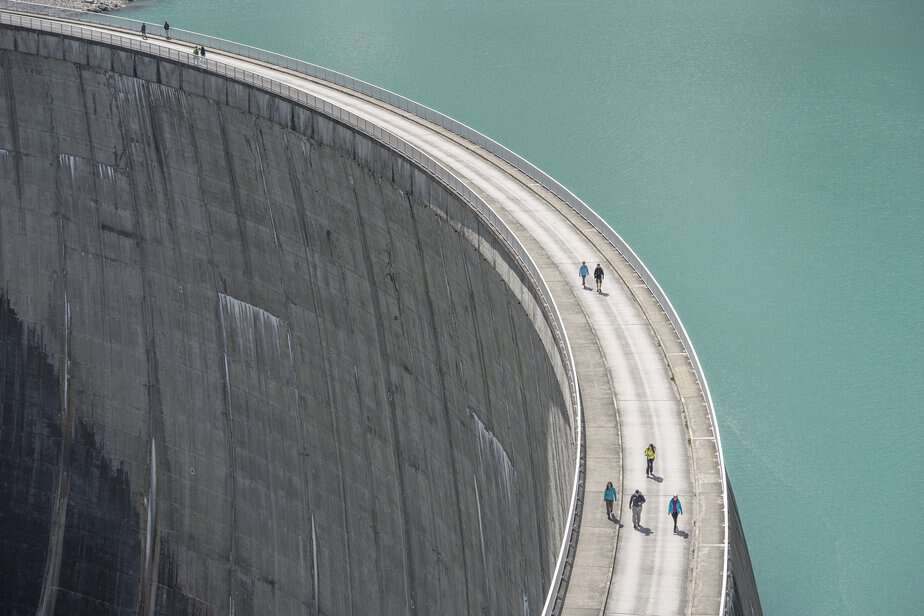
Australia’s 10 largest dams by storage capacity
The list below ranks Australia’s largest dams by full-supply storage capacity in megalitres (ML). One megalitre equals one million litres, or roughly 400 Olympic swimming pools’ worth of water. Capacities are taken from each dam’s operating authority and reflect normal full-supply level, not extreme flood maximums.
| Rank | Dam | Reservoir | State | Capacity (ML) | Year completed |
|---|---|---|---|---|---|
| 1 | Gordon Dam | Lake Gordon | TAS | 12,359,040 | 1974 |
| 2 | Ord River Dam | Lake Argyle | WA | 10,760,000 | 1971 |
| 3 | Eucumbene Dam | Lake Eucumbene | NSW | 4,798,400 | 1958 |
| 4 | Dartmouth Dam | Lake Dartmouth | VIC | 3,856,000 | 1979 |
| 5 | Eildon Dam | Lake Eildon | VIC | 3,334,158 | 1955 |
| 6 | Hume Dam | Lake Hume | NSW / VIC | 3,038,000 | 1936 |
| 7 | Edgar / Scotts Peak / Serpentine Dams | Lake Pedder | TAS | 2,937,930 | 1972 |
| 8 | Warragamba Dam | Lake Burragorang | NSW | 2,027,000 | 1960 |
| 9 | Burdekin Falls Dam | Lake Dalrymple | QLD | 1,860,000 | 1987 |
| 10 | Blowering Dam | Blowering Reservoir | NSW | 1,628,000 | 1968 |
1. Gordon Dam — Tasmania (12,359,040 ML)
Gordon Dam is Australia’s largest dam by stored water volume. The 140-metre-high concrete double-curvature arch dam sits on the Gordon River in south-west Tasmania and forms Lake Gordon, the country’s largest reservoir at 12,359 GL. Hydro Tasmania commissioned the dam in 1974, and the underground Gordon Power Station — refurbished in 2024 — generates around 13% of Tasmania’s electricity. Together with neighbouring Lake Pedder, the two reservoirs make up the biggest combined water storage system on the continent.
2. Ord River Dam — Western Australia (10,760,000 ML)
The Ord River Dam, completed in 1971 in the Kimberley region, forms Lake Argyle — the largest man-made lake in the Southern Hemisphere by surface area at 980 km². At full supply level the reservoir holds 10,760,000 ML, and during extreme tropical flood events that figure can temporarily exceed 35,000,000 ML. Lake Argyle anchors the Ord River Irrigation Area and supplies water to Kununurra and surrounding agricultural land.
3. Eucumbene Dam — New South Wales (4,798,400 ML)
Lake Eucumbene is the central storage of the Snowy Mountains Hydro-electric Scheme and the third-largest reservoir in Australia. The 116-metre-high earth and rockfill embankment dam, completed in 1958, regulates water for transfer between the Snowy, Murray and Murrumbidgee catchments. Snowy Hydro operates the reservoir as the strategic head storage for nine power stations.
4. Dartmouth Dam — Victoria (3,856,000 ML)
Dartmouth Dam on the Mitta Mitta River is Victoria’s largest dam, standing 180 metres tall — the tallest dam in Australia. Goulburn-Murray Water operates the rockfill dam, which provides backup storage for the Murray-Darling Basin and underpins irrigation supply to northern Victoria. The dam was completed in 1979.
5. Eildon Dam — Victoria (3,334,158 ML)
Lake Eildon, formed by the Eildon Dam on the Goulburn River, is the second-largest Victorian storage and a recreation hub for boating, fishing and houseboating. The original 1955 embankment was raised in the 1960s to its current capacity of 3,334 GL. Goulburn-Murray Water uses Eildon to regulate flows for one of Australia’s most intensive irrigation regions.
6. Hume Dam — NSW / Victoria border (3,038,000 ML)
Hume Dam on the Murray River straddles the NSW–Victoria border near Albury-Wodonga. Completed in 1936 and substantially enlarged in 1961, the dam holds 3,038 GL and is the principal regulating storage for the southern Murray-Darling Basin. It supports irrigation, urban water, hydroelectricity and flood mitigation across both states.
7. Lake Pedder system — Tasmania (2,937,930 ML)
Lake Pedder was enlarged in 1972 by three dams — Edgar Dam, Scotts Peak Dam and Serpentine Dam — that flooded the original glacial lake and surrounding valleys. The enlarged reservoir feeds water via the McPartlan Pass Canal into Lake Gordon to drive the Gordon Power Station. Lake Pedder remains one of Tasmania’s most controversial environmental projects but is also one of its most productive hydroelectric assets.
8. Warragamba Dam — New South Wales (2,027,000 ML)
Warragamba Dam is Sydney’s main drinking-water storage. The 142-metre-high concrete gravity dam forms Lake Burragorang and supplies around 80% of the water used by Greater Sydney’s 5.3 million residents. Completed in 1960 by WaterNSW’s predecessor agencies, the reservoir holds 2,027 GL — roughly four times the volume of Sydney Harbour. Proposals to raise the dam wall for flood mitigation have been debated since 2016.
9. Burdekin Falls Dam — Queensland (1,860,000 ML)
Burdekin Falls Dam on the Burdekin River is Queensland’s largest dam by capacity, holding 1,860 GL across Lake Dalrymple. Sunwater operates the concrete gravity dam, which supplies irrigation water to the lower Burdekin sugar cane industry and supports flood mitigation downstream of Charters Towers. The dam was completed in 1987, and a 2-metre wall raising was approved in 2023 to lift capacity by roughly 50%.
10. Blowering Dam — New South Wales (1,628,000 ML)
Blowering Dam on the Tumut River is the regulating storage downstream of the Tumut 3 Power Station in the Snowy Scheme. The 91-metre-deep reservoir holds 1,628 GL and releases regulated flows into the Murrumbidgee River for irrigation. WaterNSW operates Blowering as part of the integrated Murrumbidgee Valley water supply.
What counts as a “large” dam in Australia?
The Australian National Committee on Large Dams (ANCOLD) defines a large dam as one with a wall height of 15 metres or more, or a wall height of 10–15 metres with a storage capacity above 1 ML. Australia has more than 500 large dams under that definition. The top 10 listed above are ranked strictly by stored water volume; ranking by wall height, surface area or hydroelectric output would produce a different order.
Megalitre (ML) is the standard Australian unit for large water volumes — 1 ML equals 1 million litres or 1,000 cubic metres. Gigalitre (GL) equals 1,000 ML. The figures in the table use ML for consistency with Geoscience Australia’s national water-bodies dataset.
Why these dams matter to Australian agriculture
Six of the top 10 sit inside the Murray-Darling Basin or its tributary systems and directly underpin irrigated agriculture. Hume, Dartmouth, Eildon, Blowering and Eucumbene feed the Murray and Murrumbidgee. Burdekin Falls feeds northern Queensland sugar cane. Together these storages release the majority of Australia’s irrigation water in any given year.
For farmers and landholders building their own water storage, the engineering principles that govern a 12 GL hydroelectric dam scale down — clay-core design, compaction control, spillway sizing and freeboard — to a 5 ML farm dam. The difference is in scale, not principle. Big Ditch builds and repairs farm dams across NSW, Queensland and Victoria using the same compaction and spillway-sizing rules that apply to dams a thousand times larger.
Frequently asked questions
What is the largest dam in Australia?
The largest dam in Australia by stored water volume is Gordon Dam in south-west Tasmania, which holds 12,359,040 megalitres in Lake Gordon. By wall height, the largest is Dartmouth Dam in Victoria at 180 metres. By surface area, the largest reservoir is Lake Argyle in WA at 980 km².
Which is bigger, Lake Argyle or Lake Gordon?
Lake Gordon is bigger by water volume at 12,359 GL versus Lake Argyle’s 10,760 GL. Lake Argyle is larger by surface area at 980 km² versus Lake Gordon’s 278 km². The two reservoirs are operated by different authorities — Hydro Tasmania and the Water Corporation of WA — for different primary purposes.
Where does Warragamba Dam rank in size?
Warragamba Dam ranks 8th in Australia by storage capacity at 2,027,000 ML. It is the largest urban water supply dam in Australia and the principal storage for Sydney’s drinking water. Despite being smaller than the hydroelectric and irrigation dams above it on the list, Warragamba is the most economically important dam to the country’s largest city.
How are Australian dam capacities measured?
Dam capacity is measured in megalitres (ML) at full supply level — the maximum operational water level before water spills through the spillway. Some dams have additional flood-storage capacity above full supply level. Lake Argyle, for example, has an additional 28 million ML of flood storage above its normal 10.76 million ML full supply level.
Lindsey Hughson has built and repaired farm dams across Queensland and northern NSW since the early 1990s. The engineering principles behind Australia’s largest dams — clay-core integrity, compaction, freeboard and spillway sizing — are the same ones we apply to every dam we build, regardless of scale. For authoritative national data on large Australian water bodies, see Geoscience Australia’s largest waterbodies dataset and the Australian National Committee on Large Dams.
Got a dam on your property and not sure if it is safe, big enough, or built to last? Book a site inspection with Big Ditch and we will give you a clear assessment before the next wet season.